

Are you ready to transform your garden with the vibrant beauty of gladiolus? In this article, I’ll walk you through everything you need to know to replant these stunning flowers, ensuring they thrive in your outdoor paradise!
Key Takeaways
- Timing is Crucial: Wait until the leaves of the gladiolus turn yellow and dry out completely before replanting.
- Proper Storage: After harvesting corms, clean and store them in a cool, dry place.
- Planting Depth & Spacing: Understand the right depth and spacing for optimal growth based on soil conditions.
- Enriching the Soil: Use organic matter to enhance soil fertility, which is essential for flourishing plants.
- Yearly Care: Emphasize the importance of yearly replanting to ensure continuous blooming.
Understanding Gladiolus
You know, when I think about gladiolus, I picture them as the dazzling stars of my garden. These flowers, with their tall spikes and vibrant colors, can turn any dull space into a blooming spectacle. But, keeping them flourishing takes a little know-how. So, where do we start? Understanding the basics of gladiolus will set you on the right path.
First off, this beautiful flower is a corm, not a typical bulb. And just like every artist needs the right tools, these beauties need the right conditions to dazzle! So, let’s dive into when and how to get them ready for their show-stopping moment.
When to Replant Your Gladiolus
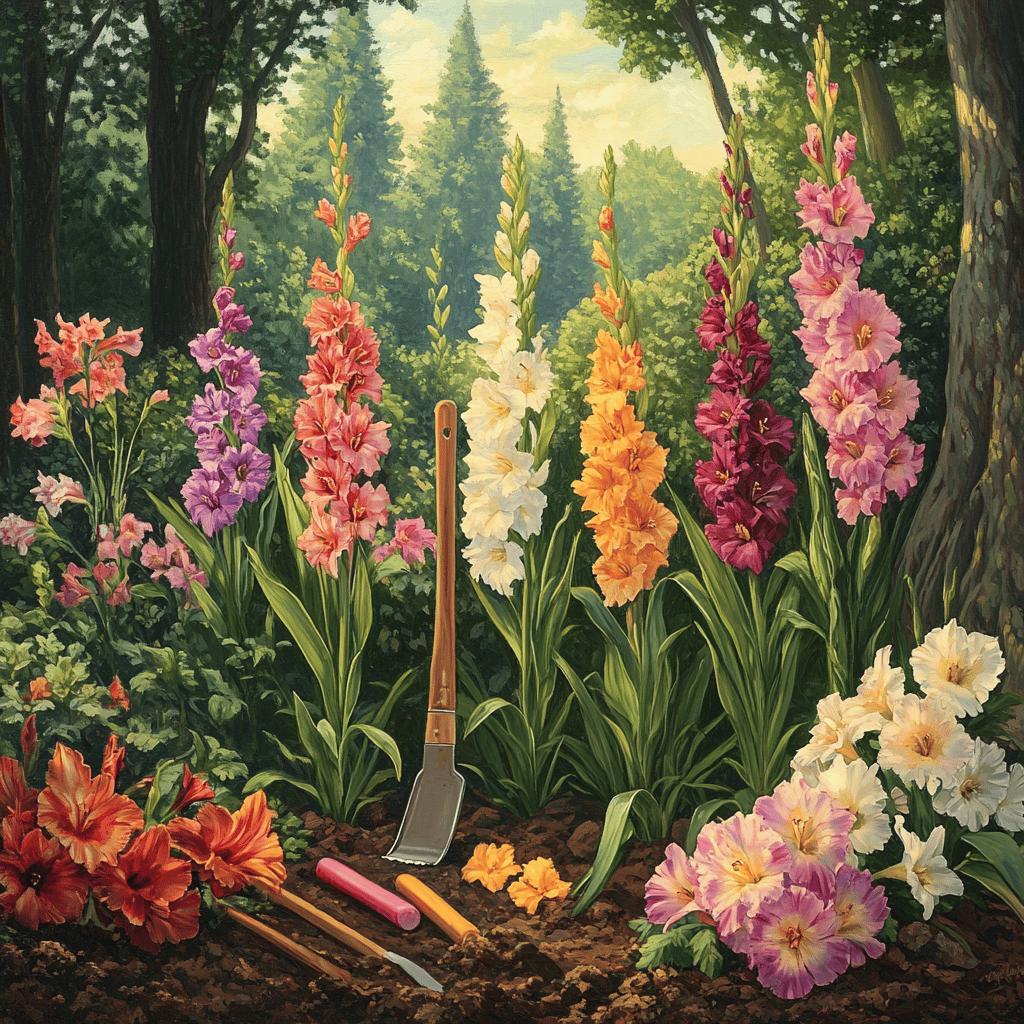
Timing is everything, isn’t it? For gladiolus, waiting until their foliage turns crispy and yellow is crucial. This is like nature’s way of saying, “Hold on a second, I’m storing up energy for next year!” Once they’ve perished, pull those corms out, give them a good cleaning, and let them dry off in the shade. Trust me, you don’t want to skip this step.
If you yank them out too soon, you’ll miss out on new growth potential. So, give it some time—after all, patience is a virtue in gardening, right?
Cleaning and Storing Corms

Once you’ve harvested those corms, it’s like unwrapping hidden treasures. But, wait! Before you toss them in a box, wash away any dirt to keep mold at bay. You wouldn’t want your prized gladiolus to come down with a case of the fungus, would ya?
After a gentle scrub, let them dry—preferably in a cool, shady spot. Then, collect them in paper bags and store them somewhere that breathes, away from sunlight. This storage act is like gently tucking them in for a winter’s nap, ready to bloom anew! Just remember: a cool, dry place is your best bet.
Preparing Your Garden Bed

Now, let’s get down to the nitty-gritty: the soil! It’s like creating the perfect canvas for your plants. If you’re blessed with rich, loamy soil, consider yourself lucky. But if not, fear not! You can amend that soil to ensure your gladiolus feel comfy.
Mix in some organic matter, such as compost or well-rotted manure, along with humus for a nutrient-packed feast. You want those corms to have a party underground—let’s make it a happening place!
Planting Depth and Spacing
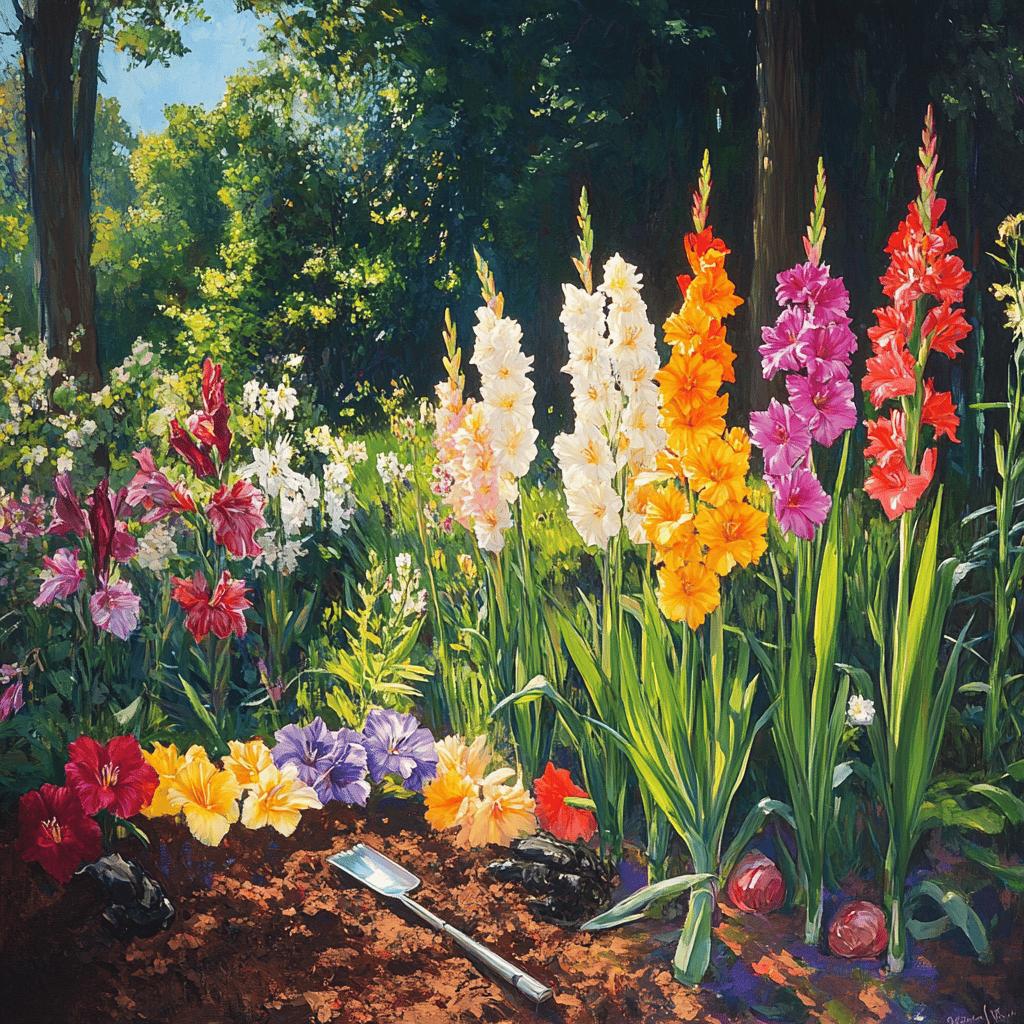
When diving into planting, think of it like tucking your friends into bed. You don’t want them buried alive, right? For moist soil, planting at a depth of 5 inches is just right; for dry soil, aim for 7 to 10 inches.
Spacing is essential; I find about 15 cm between each corm works like a charm. This gives them room to stretch out and show off! Imagine them swaying in the breeze, painting your garden with vibrant strokes of color.
Feeding Your Gladiolus

Like any diva, gladiolus loves a touch of pampering! A good fertilizer mix can do wonders, especially something like bone meal or well-composed organic fertilizer. Toss in a sprinkle and watch your gladiolus spring to life!
See, caring for them isn’t rocket science; it’s more like giving them a spa day. They need to feel cherished and, in return, they’ll reward you with stunning blooms!
Watering Wisely
Watering is another key factor—too much can drown their spirits, while too little can leave them parched. Keep soil evenly moist, but avoid turning it into a swamp! A gentle sprinkle when the soil begins to dry works wonders.
Also, don’t forget to keep an eye out for local weather. Nature has her own watering schedule, after all!
Protecting from Pests

Ah, the dreaded pests—like garden ninjas lurking in the shadows. Thankfully, some simple measures can send them packing! Make a habit of checking on your gladiolus for any invaders.
Garden-friendly insecticides can help, but I prefer natural methods whenever possible. Sometimes, a blast of soapy water is all it takes to remind those pests that they aren’t welcome!
Yearly Replanting Ritual
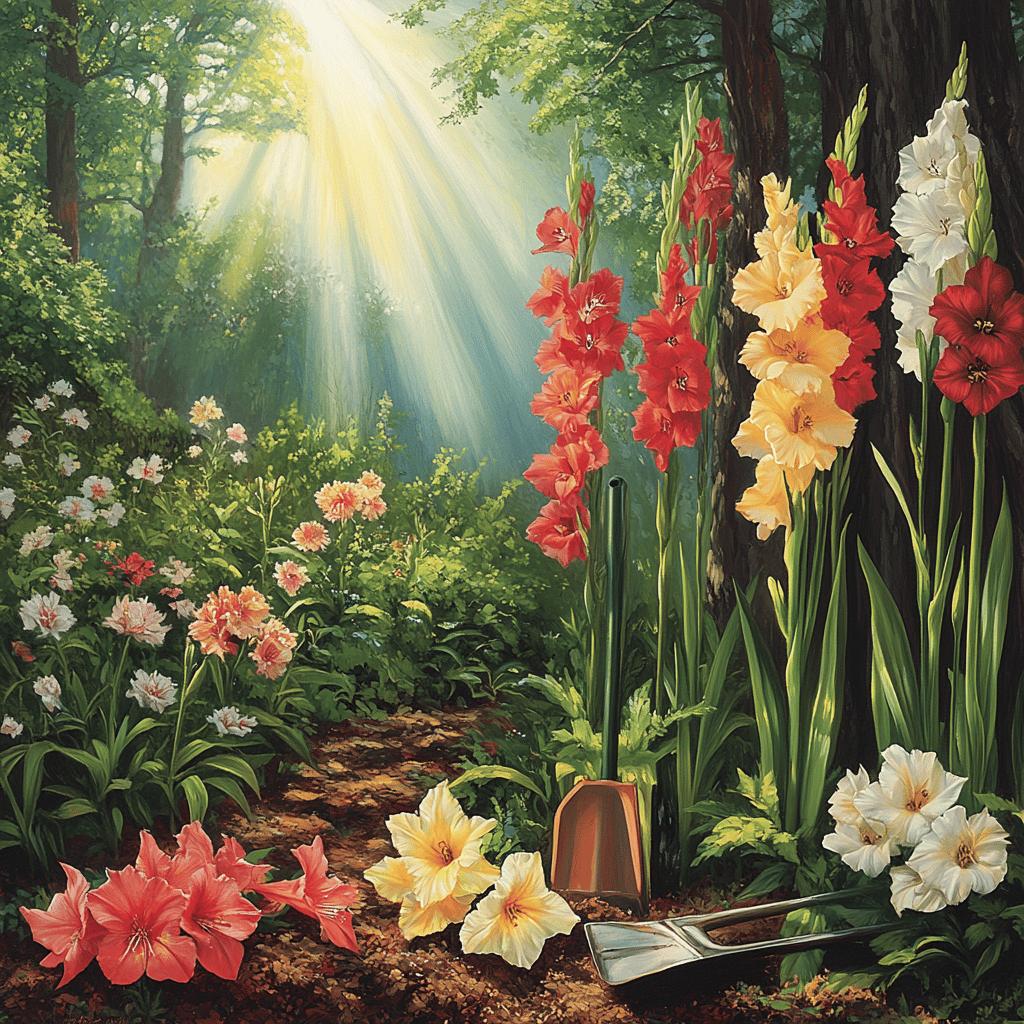
Here’s a fun fact: you can’t just plant and walk away. To keep the show going, you’ll need to replant your corms annually. Consider it a little annual festival in your garden! This way, you maintain freshness and vitality in your flower patches.
Each year brings a new chance to try different colors and varieties; it’s like a surprise party for your garden! Who doesn’t love a surprise? 🎉
Embracing the Beauty of Your Grow

Once those gladiolus bloom, sit back and embrace the beauty. It’s a feeling like no other, seeing those tall, proud blooms rise up and shout, “Look at me!” You’ll realize that every moment of care and attention was worth it. You’re not just a gardener; you’re an artist crafting a living masterpiece.
Conclusion
In the end, gladiolus aren’t just flowers; they’re like friends that bring joy and color to our lives. With the right knowledge, a little effort, and a pinch of patience, you can create a stomping ground for these beauties that’ll have everyone in your neighborhood wondering, “Who’s the mastermind behind that garden?”
So, are you ready to dive into the world of gladiolus replanting? Let’s turn that dream garden into a blooming reality together!