

Introduction to Bromeliads
As an avid plant enthusiast, I’ve gotta say, bromeliads are some of the coolest, most eye-catching plants out there. These tropical beauties come in a wide range of shapes, sizes, and colors, adding a touch of exotic flair to any indoor or outdoor space. But trust me, bromeliads aren’t just pretty faces – they’re also surprisingly low-maintenance and easy to care for, making them the perfect choice for both seasoned green thumbs and newbie plant parents.
Bromeliad Varieties and Characteristics
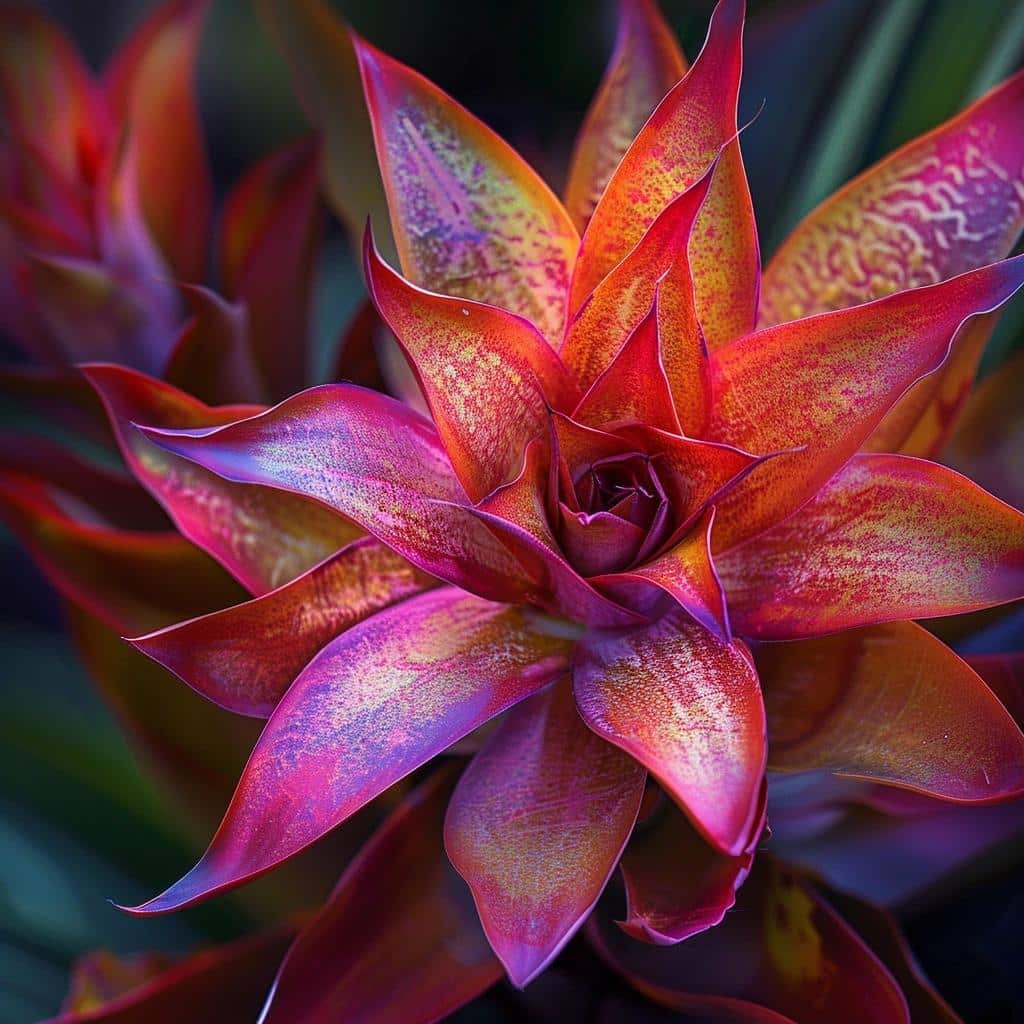
Bromeliads are part of the Bromeliaceae family, which consists of over 3,000 different species. Talk about variety! Some of the most popular types include:
- Guzmanias: Known for their vibrant red, orange, and yellow bracts (modified leaves).
- Vrieseas: Featuring eye-catching stripes and patterns on their leaves.
- Aechmeas: These guys sport unique, funneled inflorescences (flower spikes).
- Tillandsias (air plants): No soil required for these epiphytic wonders!
But what really sets bromeliads apart is their unique growing habit. Many species form a tight rosette of leaves, creating a natural cup-like structure that can hold water. Pretty nifty, right?
Bromeliad Care Requirements
Now, let’s talk about keeping these tropical treasures happy and healthy. The good news is, bromeliads are relatively low-maintenance. They’re like the low-key, chill friends of the plant world.
Lighting and Temperature Needs
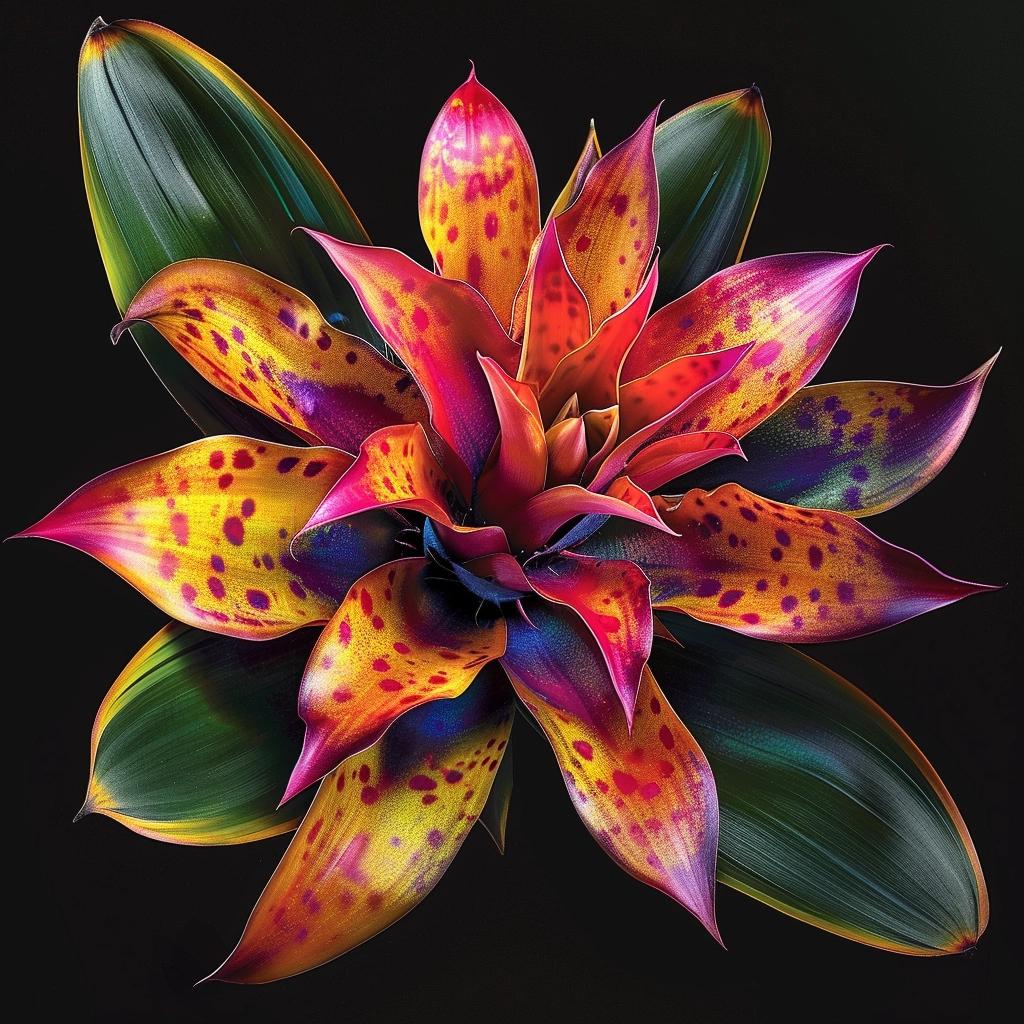
Bromeliads love bright, indirect light, so keep them near a sunny window or under some grow lights. As for temperature, they prefer it on the cooler side, with an ideal range of 65°F to 80°F (18°C to 27°C). Just like me, they’re not fans of extreme heat or cold.
Watering and Humidity Levels
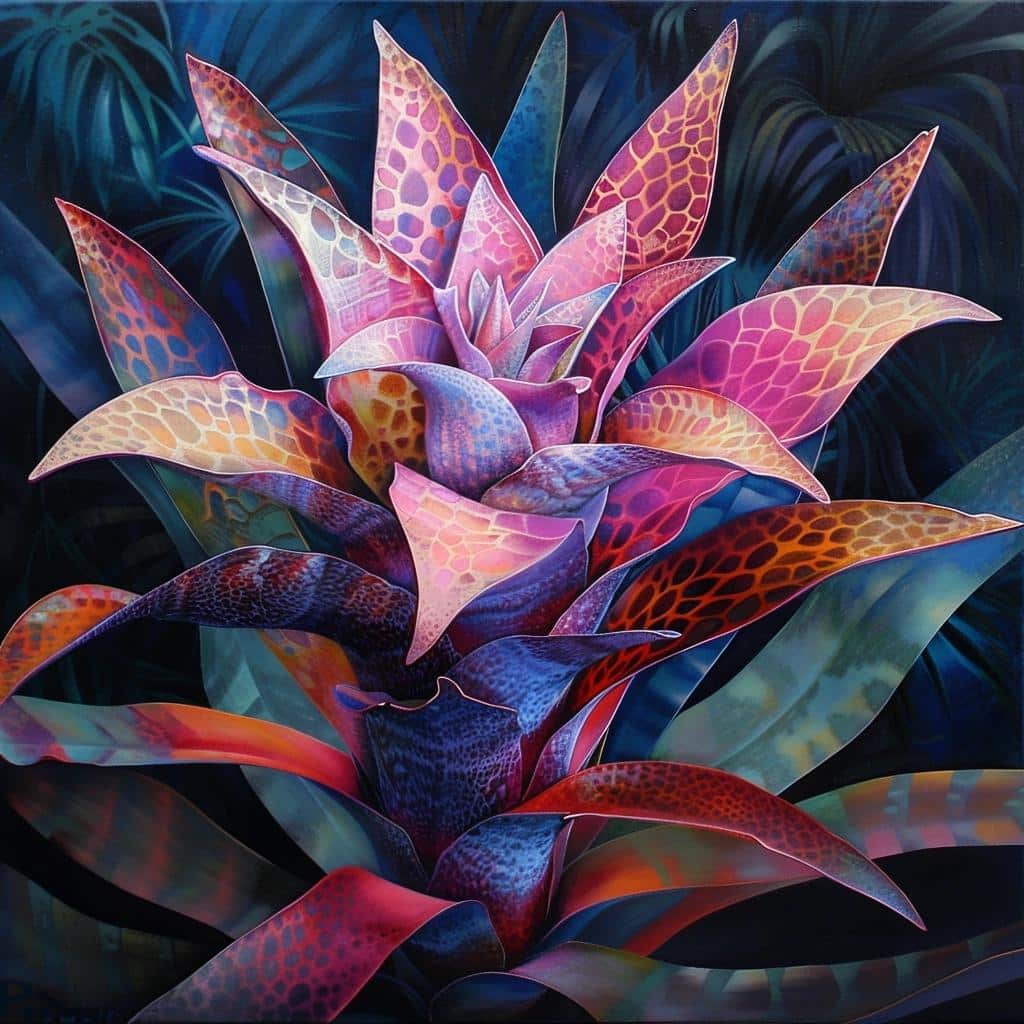
Here’s the fun part: you get to water bromeliads in their “cups”! Just pour some water into the center of the rosette, being careful not to overdo it. As for humidity, bromeliads are pretty flexible, but they’ll appreciate a little extra moisture in the air if you can provide it.
Fertilizing and Potting Bromeliads
Bromeliads are light feeders, so you don’t need to go overboard with the fertilizer. A balanced, diluted solution every month or so should do the trick. And when it comes to potting, they’re happy in a well-draining soil mix or even mounted on bark or driftwood.
Conclusion: Enjoying the Beauty of Bromeliads

At the end of the day, bromeliads are just fun, low-key plants that bring a touch of tropical flair to any space. With their unique shapes, vibrant colors, and easy-going nature, they’re the perfect addition to any plant collection. So why not add a few of these beauties to your own little indoor jungle? Trust me, you won’t regret it.