

Asters are the undisputed stars of fall gardens, with their dainty, daisy-like flowers in a rainbow of hues. From deep, velvety purples to vibrant pinks and pristine whites, these perennials bring a burst of color when most other blooms have faded. Not only are they a treat for the eyes, but they’re also a beloved nectar source for butterflies and other pollinators.
3 Key Takeaways
- Asters come in a wide variety of colors, shapes, and sizes, making them versatile additions to any garden. Whether you’re looking for a compact ground cover or a towering focal point, there’s an aster that fits the bill.
- These hardy, low-maintenance plants thrive in full sun and well-drained soil, making them perfect for busy gardeners. With proper care, they’ll reward you with a stunning display year after year.
- Many asters are native to North America, providing food and shelter for local wildlife. By incorporating them into your landscape, you can create a beautiful and eco-friendly haven.
Discover the Dazzling Diversity of Asters
As I stroll through my autumn garden, I can’t help but feel a sense of joy and wonder. The asters are in full bloom, their vibrant hues dancing in the crisp breeze. It’s a bittersweet moment, as these resilient beauties signal the end of the growing season, but they do so with such flair and elegance that I can’t help but embrace the change.
You see, asters have a special place in my heart. Not only are they incredibly easy to grow, but they also offer such an incredible range of colors and forms that it’s impossible not to find one (or ten!) that speaks to your gardening soul. From the diminutive alpine asters that hug the ground to the stately New England varieties that tower above the rest, there’s an aster for every nook and cranny of your outdoor space.
The Compact Charmers
Let’s start with the compact and low-growing varieties. These little gems are perfect for rock gardens, borders, or even patio containers. The alpine aster (Aster alpinus) is a personal favorite, with its delicate purple or pink blooms that seem to defy gravity as they cling to the ground. Can you imagine a more charming groundcover?
Then there’s the Italian aster (Aster amellus), a clump-forming powerhouse that delivers large, yellow-eyed daisies in shades of purple, blue, and pink. These compact plants are ideal for the front of a sunny border, where their blooms can steal the show without overpowering their neighbors.
The Tall and Stately
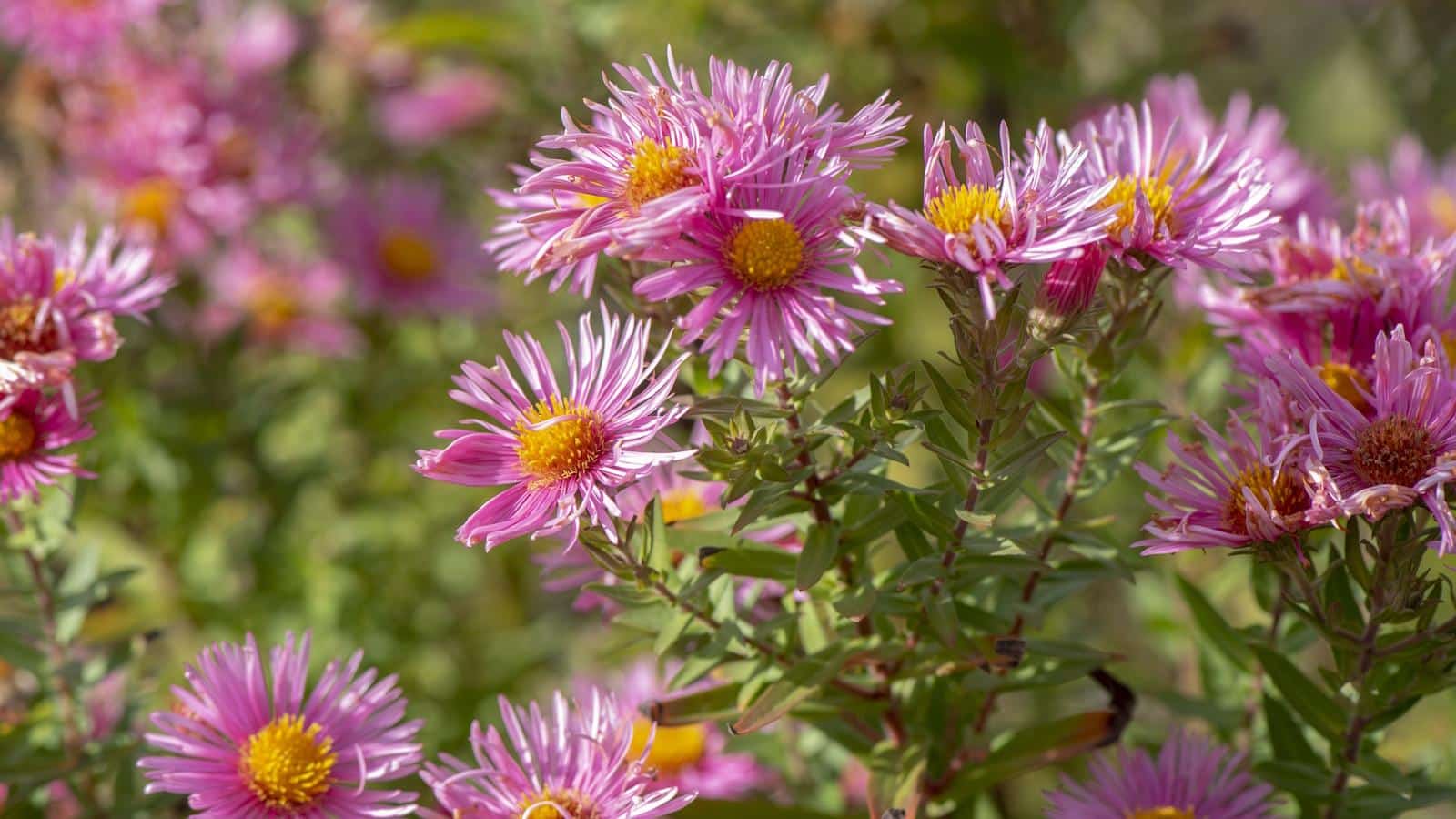
But if you’ve got the space, why not go big? The New England aster (Symphyotrichum novae-angliae) is a true showstopper, with its towering stems adorned with vivid purple, red, pink, or white daisies. These beauties are perfect for creating a stunning autumnal backdrop in your garden, and they’re an absolute magnet for butterflies and other pollinators.
And let’s not forget the aromatic aster (Symphyotrichum oblongifolium). As the name suggests, its foliage releases a minty balsam scent when crushed, adding an extra sensory delight to your garden. But the real star of the show? Those semi-double, violet-blue daisies that bloom incredibly late in the season, providing a burst of color when everything else has faded.
The Mildew-Resistant Superstars
Now, I know what you’re thinking: “But what about powdery mildew? That nasty fungus can really put a damper on my aster enjoyment.” Fear not, my friends! Many asters have developed a natural resistance to this pesky problem, and breeders have been hard at work developing even more mildew-proof varieties.
Take the Frikart’s aster (Aster x frikartii), for example. These multi-branched beauties are 100% mildew-free, and they’ll treat you to a long season of lavender-blue or violet daisies surrounding a golden eye. Talk about a win-win!
Native Treasures for Wildlife
But what really sets asters apart, in my book, is their ability to support local wildlife. Many of these plants are native to North America, which means they’ve evolved alongside our local butterflies, birds, and other critters. By incorporating native asters into your landscape, you’re creating a welcoming oasis for these important pollinators and other wildlife.
Take the New York aster (Symphyotrichum novi-belgii), for example. This vigorous, upright plant is a true East Coast native, and it’s been attracting butterflies and other insects with its colorful daisies for centuries. And let’s not forget the large-leaved aster (Symphyotrichum macrophyllum), whose broad foliage provides a perfect spring ground cover for all sorts of critters before bursting into bloom in the fall.
Easy-Peasy Care
But perhaps the best part about asters? They’re incredibly low-maintenance. Most varieties thrive in full sun and well-drained soil, making them a breeze to grow even for the most novice gardeners. And while a little extra water during dry spells can help keep powdery mildew at bay, these resilient plants can often tough it out even during periods of drought.
Oh, and let’s not forget about dividing and transplanting. It’s like getting free plants! Simply dig up your asters every few years, divide the clumps, and replant the strongest pieces in fresh soil. Boom! Instant aster multiplication.
A Kaleidoscope of Color
One of the best things about asters is the sheer diversity of colors they offer. From the deepest, richest purples to the brightest, most cheerful yellows, there’s an aster hue to suit every color palette.
Personally, I’m a sucker for the soft, romantic pinks of varieties like ‘Harrington’s Pink’ and ‘Pink Zenith’. But if bold, in-your-face colors are more your style, you can’t go wrong with the electric purples of ‘Purple Dome’ or ‘Violet Queen’.
Cut Flower Fabulousness
And let’s not forget about the incredible vase life of asters! These long-lasting blooms make fabulous cut flowers, adding a touch of autumnal charm to any arrangement.
Seriously, can you imagine anything more beautiful than a rustic Mason jar filled with a bouquet of mixed aster blooms? The delicate petals, the golden centers, the blending of colors – it’s enough to make any flower lover swoon.
A Gardener’s Best Friend
But perhaps my favorite thing about asters is their sheer reliability. Unlike some diva plants that require constant coddling, asters are the low-maintenance besties that every gardener needs in their life.
They’ll tolerate a bit of neglect (although they certainly don’t deserve it!), they’ll bounce back from drought or heat stress, and they’ll reward you with a stunning display year after year. What’s not to love?
Design Inspiration
So, now that you’re thoroughly smitten with these fantastic fall bloomers, how can you incorporate them into your garden?
For a classic cottage garden vibe, try interplanting asters with other autumn stunners like chrysanthemums, ornamental grasses, and sedum. The contrasting textures and colors will create a beautifully layered, romantic scene that’s sure to stop passersby in their tracks.
Or, for a more modern, minimalist look, consider massing a single variety of aster in a large container or raised bed. The repetition of form and color will create a bold, striking focal point that’s both elegant and eye-catching.
A Floral Renaissance
Asters may be old-fashioned favorites, but they’re experiencing a true renaissance in popularity. And it’s no wonder – with their low-maintenance requirements, stunning beauty, and ability to support local wildlife, they’re the complete package for today’s eco-conscious gardeners.
So why not jump on the aster bandwagon? Trust me, once you experience the joy of these late-season showstoppers, you’ll be an aster addict for life. Happy gardening, my friends!
Conclusion
Asters are truly the unsung heroes of the fall garden. With their dazzling array of colors, shapes, and sizes, they offer something for every gardener and every landscape. From compact groundcovers to towering beauties, native treasures to mildew-resistant superstars, these resilient perennials have it all.
But what really sets asters apart is their effortless charm and low-maintenance nature. They’re the perfect plants for busy gardeners who crave beauty without the fuss, rewarding you with a stunning display year after year with minimal effort.
So why not embrace the aster Renaissance? Incorporate these fantastic fall bloomers into your outdoor spaces, and prepare to be dazzled by their vibrant hues and delicate elegance. Trust me, once you experience the joy of asters, you’ll never look back!